
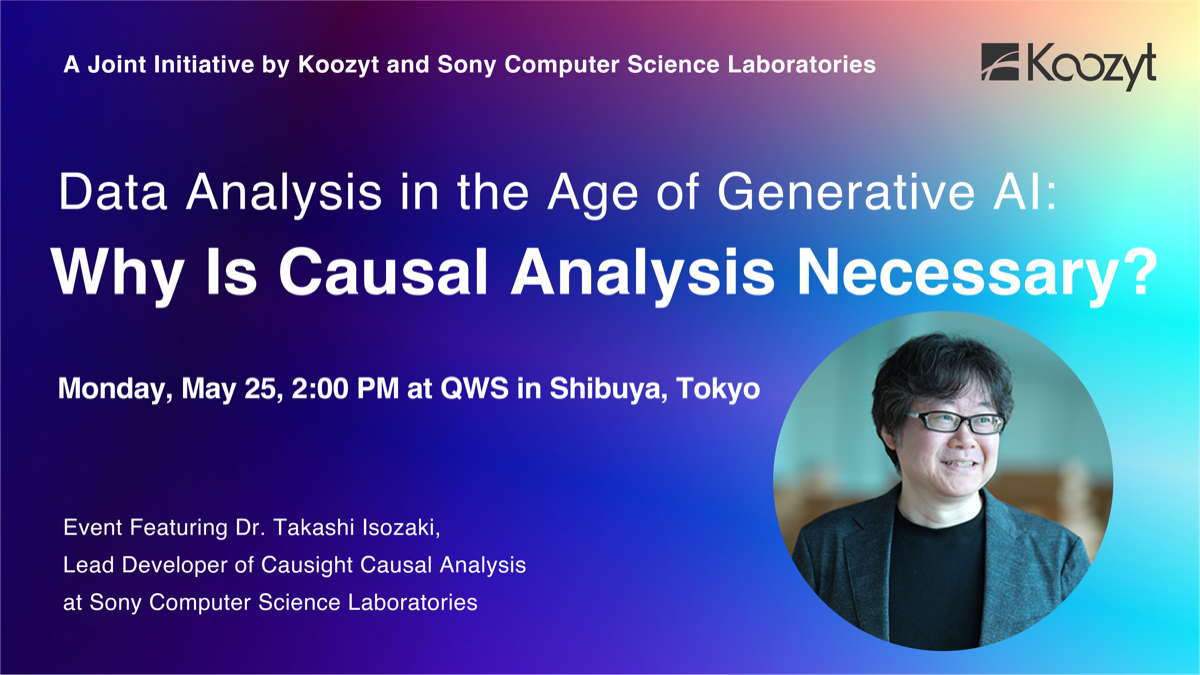
This event was jointly organized by Sony Computer Science Laboratories, Inc. (Sony CSL) and Koozyt, Inc. The two companies are jointly commercializing the causal analysis tool “Causight,” and as part of this partnership, they organized this event with the hope that participants would “experience firsthand the fascination and importance of thinking about causality.” Approximately 30 people attended, including corporate data professionals and others involved in promoting data utilization within their organizations.
Workshop
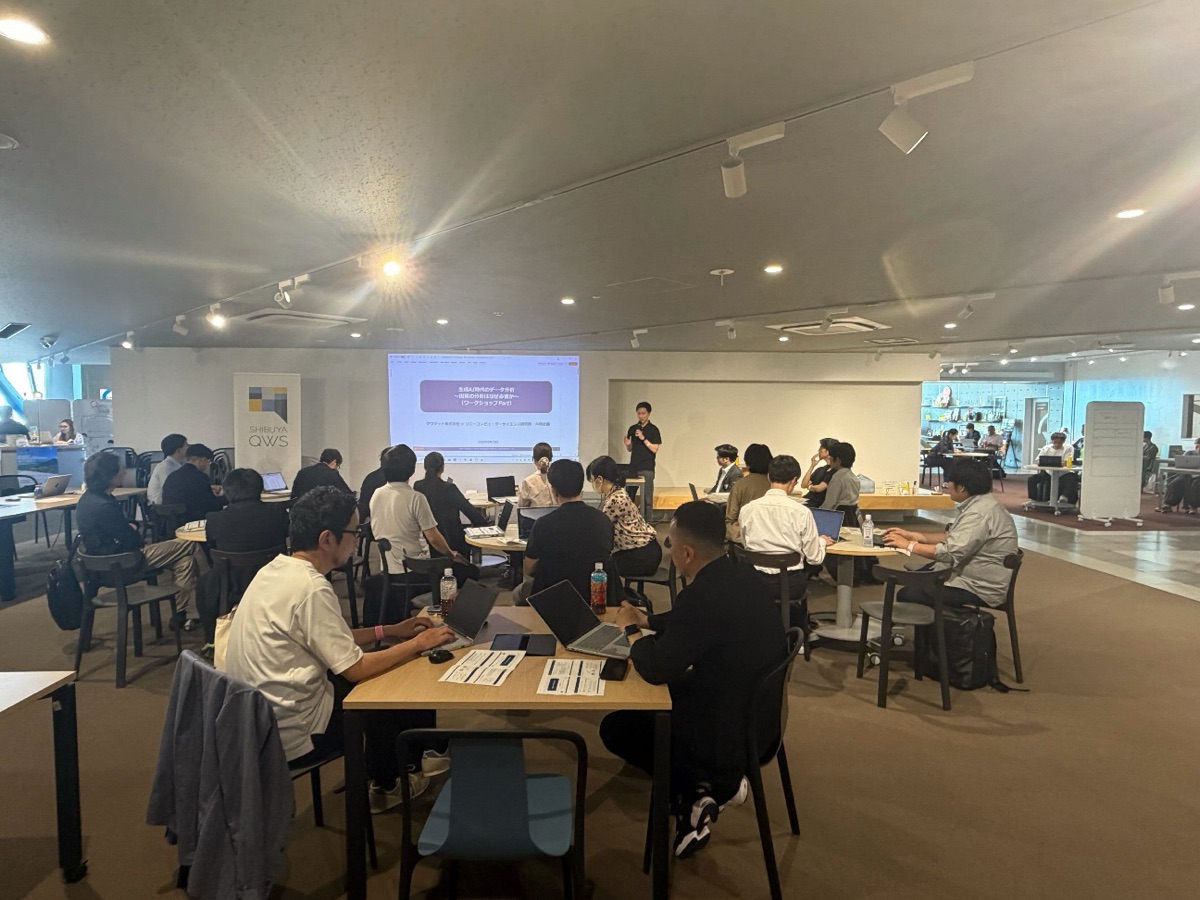
In the first half of the workshop, under the theme “Comparing analyses performed by generative AI and causal analysis using Causight,” participants experienced firsthand the differences between the two approaches using the same dataset.
The dataset used was a well-known open dataset containing information on 35 items—including age, job title, salary, job satisfaction, and overtime status—for approximately 1,500 fictional employees. It was designed to predict “which employees will leave the company.”
First, we asked participants to feed this data to generative AI and instruct it: “Analyze the factors contributing to employee turnover. Do not rely on past insights; instead, create your own machine learning model, perform the analysis, and summarize the results.” Generative AI then used the dataset and machine learning models such as random forest to present, in order of importance, which factors significantly contributed to turnover predictions.
On the other hand, analyzing the same dataset with Causight allows for a structural understanding of how specific factors influence the variables of interest. While generative AI analysis reveals “what is related to employee turnover,” it does not show the specific relationships connecting the variables. Causight’s analysis results visualize the causal flow between variables, clarifying relationships that are difficult to discern through general predictive analysis alone.
Making decisions based solely on the output of generative AI, without considering the context of the data, carries significant risks. This is because contribution rates (or importance scores) in machine learning are, by their very nature, metrics designed to improve the accuracy of “predictions”—not to infer causal relationships between variables.
The unique approach of causal inference goes beyond simply identifying “important factors”; it allows us to discern “which variables are direct causes,” “which variables exhibit mere spurious correlation,” and “which variables, even indirect ones, are likely to be effective targets for intervention.”
The figure below succinctly illustrates the difference between predictive analysis and causal analysis.
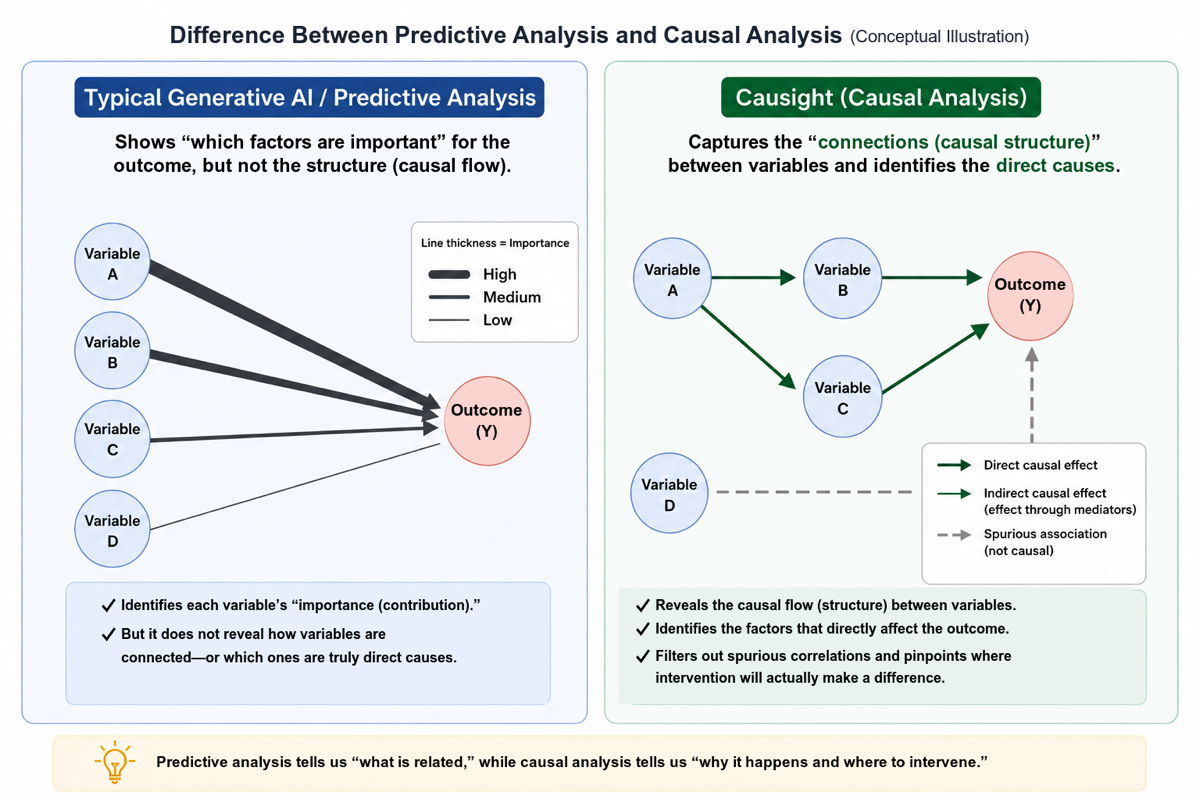
As shown in this figure, we believe that causal analysis represents the gold standard of factor analysis—implementing measures on variables that can be identified as causes (rather than spurious correlations) to change the outcome.
Structural information also leads to the discovery and recognition of new relationships among explanatory variables, deepening our understanding of the data as a whole. Furthermore, as shown in the model on the right side of the figure, instead of taking action on B and C individually, targeting the more fundamental cause A can change the outcome Y more efficiently.
Furthermore, understanding the structure allows us to perform causal inference on the effects of interventions, enabling us to quantitatively estimate the magnitude of the effect that a hypothetical intervention on A would have on Y. We can also calculate the extent of any side effects on other variables, allowing us to evaluate interventions by considering not only their effect on Y but also their overall impact.
What became clear through this workshop is the division of roles between these two approaches. Generative AI is useful as a tool for generating hypotheses by rapidly identifying correlations among a vast number of variables. On the other hand, causal inference tools like Causight can identify reliable courses of action by unraveling the hierarchical structure among variables and separating direct causes, upstream factors, and environmental factors that are not causes.
Ultimately, it is not a matter of which is superior—generative AI or causal inference tools. The key to further improving the accuracy of data utilization is to leverage their respective strengths, using each where it excels.
Technology Overview & Case Studies
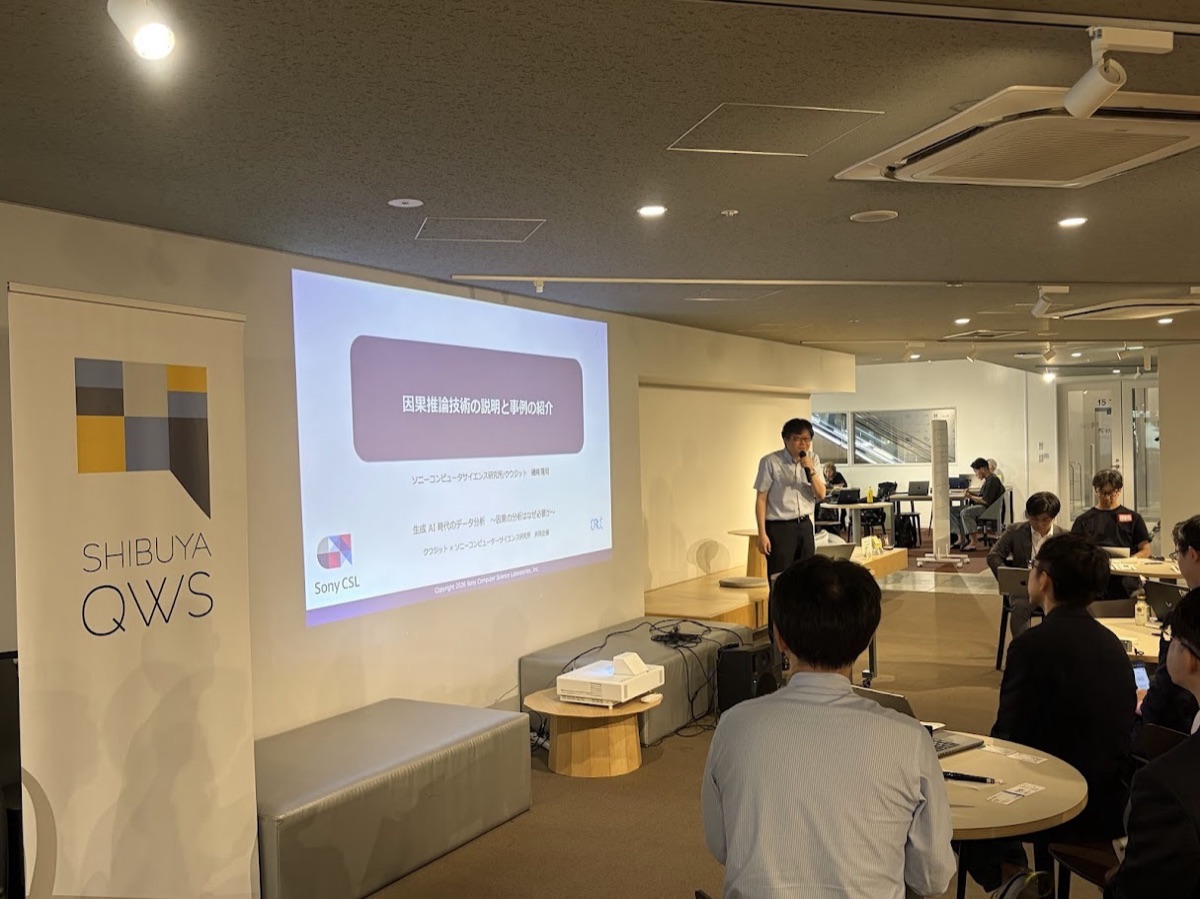
The second half featured a technical presentation and case studies by Dr. Takashi Isozaki, a Senior Researcher at Sony CSL and the inventor of Causight.
Since participants had just worked with the data during the workshop, a steady stream of incisive questions came from the audience. He carefully addressed these in-depth inquiries—such as “Why can we understand the structure of the factors?” and “Can we identify hidden factors not included in the dataset?”—while explaining the technical background.
Next, he introduced how Causight is being utilized, citing actual business cases from both within and outside the Sony group companies. A wide range of industry applications were presented, including identifying the causes of automotive engine malfunctions, analyzing defect causes in semiconductor manufacturing, evaluating the effectiveness of direct mail promotions at a property and casualty insurance company, and analyzing survey data from a consumer goods manufacturer.
Feedback from Participants
We received the following feedback from participants.
Causight is a causal analysis tool developed by Sony CSL and provided as a joint venture with partner companies, including Koozyt, Inc. and Dentsu Soken Inc. It estimates causal relationships from data and quantitatively identifies “what factors are influencing the outcome.”
https://causight.tech/If you’d like to see whether Causight could work with your own data, or simply want to learn more, please feel free to contact us. We’ll take the time to understand your situation and propose the approach that best fits your needs.
▶ Contact us here*Causight is a technology developed by Sony Computer Science Laboratories, Inc. (Sony CSL) and is provided through a business partnership involving Sony CSL, Koozyt, Dentsu Soken, and other partner companies.
*“Causight” is a registered trademark of Sony Group Corporation.